
Read this article in Dutch - lees dit artikel in het Nederlands
What does intimacy coordination actually involve in the day-to-day practice of performing arts?
Philine: The first thing I would say is that our work doesn't begin in the rehearsal room!
Melina: Yes! Exactly! A significant part of intimacy coordination happens in preparation. Ideally, we're involved as early as possible, beginning with conversations with the director, then the performers and the other people involved in creating and supporting the work.
Every project is different. In film, the production process tends to follow a more established structure, whereas in the performing arts, the creative processes and ways of working can vary enormously. Our involvement depends on the nature and size of the project, the artistic vision and the specific people involved. This makes timely preparation particularly important. We need to understand the specific needs of each production before deciding what kind of collaboration or support would be appropriate.
Philine: The performing arts encompass many different disciplines, from theatre and dance to opera and circus. Sometimes physical contact is integral to the discipline itself; in other cases, intimacy emerges through the story, the characters, the artistic vision or the themes being explored. Each discipline and artistic medium calls for its own nuanced approach.
We also need to think beyond the rehearsal room. Casting, the composition of the creative team, rehearsal schedules, production conditions and touring arrangements can all be relevant. It's useful to consider these questions early, rather than waiting until difficulties arise.
For example, the way a rehearsal space is organised, the conditions in which performers change clothes, or the arrangements made for touring can influence people's experience of a production. Sometimes small, practical changes can make a real difference.
Some directors may be concerned that an intimacy coordinator will interfere with their artistic vision. How do you approach that relationship?
Philine: Some directors are initially sceptical, often simply because they're unfamiliar with the role. That's why preparation and communication are so important.
We're not there to arrive in the rehearsal room and contradict the director or prevent improvisation. Ideally, we've already developed a working relationship and discussed the artistic intentions and the practical questions they raise.
For example, a performer might be open to the possibility of nudity but not yet have enough information to make a decision about the specifics. They may not know the costume, lighting, staging, proximity to the audience or who they'll be performing with.
For me, this is fundamental to informed consent: people need to understand what they're being asked to do and the context in which it will happen.
Rather than expecting an immediate decision, we can help the team explore these questions progressively as the creative process develops. That allows everyone to work with more information and clearer expectations. For me, this is fundamental to informed consent: people need to understand what they're being asked to do and the context in which it will happen.
Melina: Yes, I see my role as helping to facilitate the artistic vision, not taking it over. The first step is to understand what the director wants to create. From there, we can explore what kind of collaboration will best support the work and the specific people involved.
Sometimes a director is already very comfortable directing intimate material, and my role is primarily to support the performers and the wider team. In other situations, a director may want more help developing or choreographing a scene. The level of my involvement can also change as the collaboration develops.
I've experienced many situations where our involvement has allowed directors and performers alike to explore their artistic ideas and interpretations in greater depth. Working with us during preparation, and knowing that we've helped establish a framework tailored to the intimate content, can give artists more confidence and space to concentrate on their creative work.
What can the presence of an intimacy coordinator change for performers?
Philine: One important aspect is giving performers an additional opportunity to express their questions, ideas, needs or concerns.
Sometimes a performer may not want to discuss something with the entire group, particularly early in a process. An individual conversation can offer an opportunity to identify practical needs or boundaries and consider how those can be taken into account.
Over time, performers may become more comfortable communicating directly with their colleagues. But that process is different for everyone, and it isn't something we should assume will happen in a particular way.
Sometimes the solutions are very practical. For example, I've worked with a team on how to organise changing rooms during a tour. Rather than automatically dividing people by gender, we discussed what would actually be useful to the performers. The solution was to offer a more sociable changing room and a quieter one, so people could choose according to their needs on a given day.
It's a small example, but it shows how listening to the people involved can lead to practical arrangements that don't rely on assumptions about what they need.
A big part of our work is asking questions: What does someone need to participate fully in the artistic process? What information might still be missing? What alternatives could support both the artistic vision and individual needs?
Melina: Our particular position allows us to offer an additional channel of communication, especially when professional hierarchies or personal relationships make it difficult for someone to express their needs or boundaries. We can't eliminate these dynamics, but we can help navigate them. Even in the most thoughtful creative processes, performers sometimes appreciate being able to ask for something without having to explain their reasons to everyone.
A big part of our work is asking questions: What does someone need to participate fully in the artistic process? What information might still be missing? What alternatives could support both the artistic vision and individual needs?
These questions can evolve throughout a creative process, as performers discover new needs or possibilities. For me, intimacy coordination is largely about facilitating that ongoing dialogue between the collective artistic process and the individual experiences of the people involved.

about Philine Janssens
Philine Janssens (She/Her) began her career several years ago as a professional dancer working for the finest opera houses and dance companies. From experience, she knows what nudity and exposure feel like. As a professional choreographer and movement coach, she is a people person who knows how to guide, coach, and add value to a production. This combination of skills and experiences brought her seamlessly to her current position as an intimacy coordinator (IC).
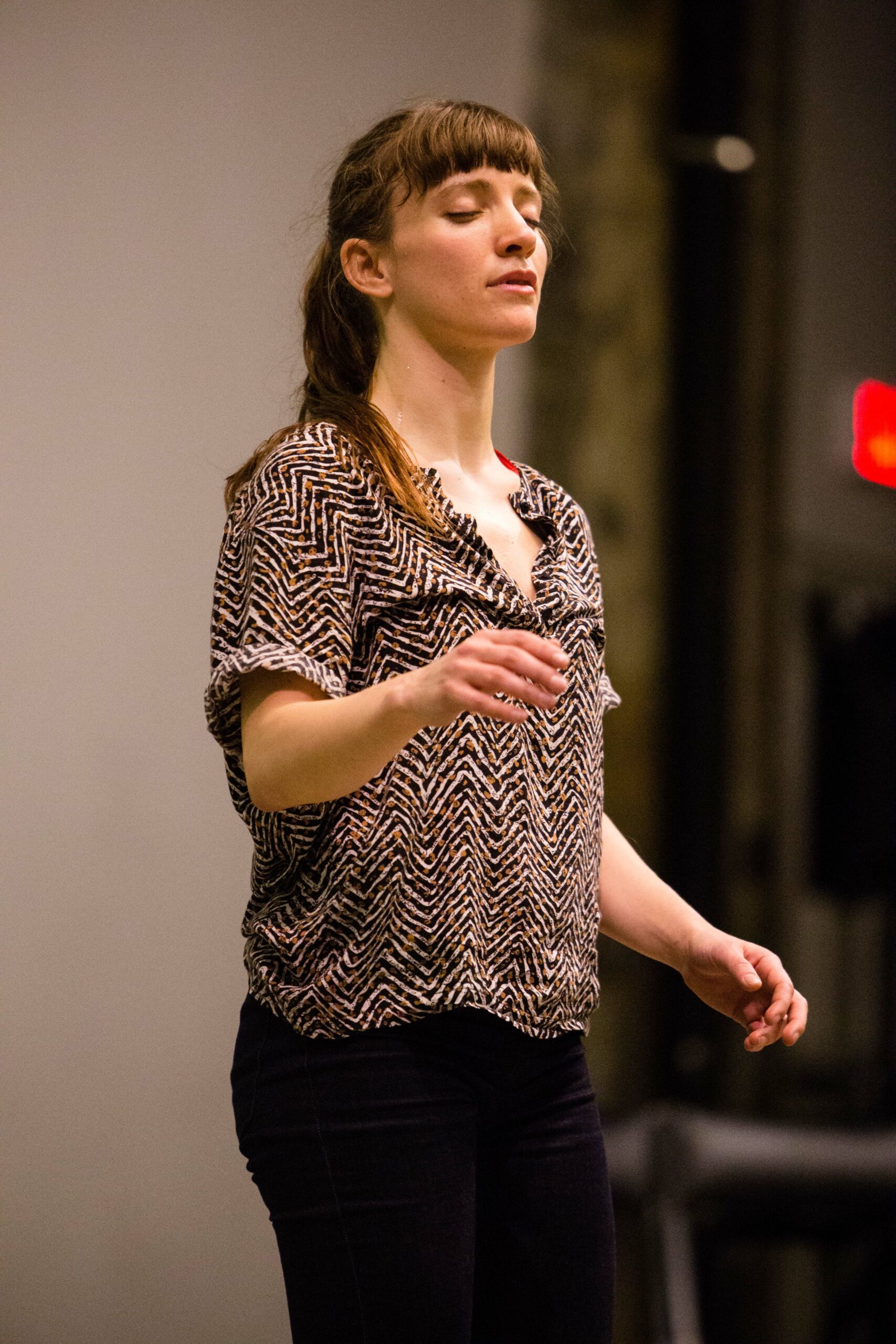
about Melina Stinson
Melina Stinson is a Canadian living between Tiohtià:ke/Montreal and Brussels. She has been dancing, creating, performing and teaching professionally since 2009. Since 2016, she has been exploring the question of agency in dance and is now sharing the boundary practices she has been developing with other humans who are creating, performing and moving.
You both have backgrounds as performers. How does that influence your work?
Philine: Having worked on stage gives me a practical understanding of the conditions performers encounter: rehearsals, quick changes, costume departments, technical requirements, touring and the intensity of working closely with a group over time.
That experience can help when communicating with both performers and production teams. It means I recognise many of the practical situations they're navigating.
It also helps me think about the details that can easily be overlooked. What happens backstage? What does a performer need during a quick change? How will the arrangements made during rehearsals work when the production goes on tour? These practical questions can be just as relevant as what happens on stage.
Melina: My background as a dancer deeply informs my work as an intimacy coordinator. It helps me understand the complexity of the creative process as well as the intensity of performance.
I know how quickly time passes and how difficult it can be to communicate, or even be aware of, what one might need in rehearsal or on stage. Facilitating this communication and supporting the conditions in which artistic choices can be explored remain central to my current work.
You're organising a lab for Sociaal Fonds Podiumkunsten. What can participating teams expect?
Philine: The most important thing is that this is a lab, not a course about the theory of intimacy coordination and not training to become an intimacy coordinator.
It's a hands-on opportunity for creative teams to bring their own projects and questions. We want to understand what they're working on, what they need and what challenges they're encountering.
The exchange between participating teams is also part of the process. They can learn from hearing about different creative approaches and discussing practical questions together.
The intention is also to offer a follow-up moment with one of us, focused more specifically on each participating project. Depending on the project's needs, that could involve continuing the conversation with the team or looking more closely at their rehearsal process.
Melina: We'll begin with the projects themselves. What intimate content is involved? Where is the team in its creative process? What questions or challenges are already present?
From there, we'll work with the questions and situations that emerge from their projects, approaching them as we would in our practice as intimacy coordinators. Together, we'll explore possible approaches and practical solutions.
The purpose is for participants to experience what a collaboration with an intimacy coordinator might look like for their specific project. The more concrete the project they bring, the more specifically we can work with their questions.

safer stage, wilder art - intimacy coordination lab
Are you working on a production that involves intimacy, nudity, sexuality or explicit content?
Are you at the end of the writing stage, already on tour or everything in between?
Participate on 10 December in our one day free lab for performing arts productions. This lab will provide the chance to have advice and workshopping regarding your project. After the lab, benefit from an extra half a day tailor-made feedback session for your organisation.
Who is the lab intended for?
Philine: We're particularly interested in welcoming people who are actively involved in shaping a project: directors, choreographers, producers and other members of the core creative team.
The focus is on the project and the way the team is organising its creative process, rather than on addressing an individual's personal situation in isolation.
This might involve sensitive subject matter, nudity or physical contact, but it can also relate to personal or autobiographical material, or other forms of intimacy that are specific to the artistic context.
Melina: It can be a team from any performing arts discipline working with intimate content or situations involving heightened exposure or vulnerability.
This might involve sensitive subject matter, nudity or physical contact, but it can also relate to personal or autobiographical material, or other forms of intimacy that are specific to the artistic context.
For example, it might be three close friends and colleagues working on a very personal trio where they are “wearing all the hats” and are responsible for everything from creation and performance to costumes and touring. Or it might be a larger production exploring nudity or other forms of physical exposure.
It could also be a project involving close contact or participation from audience members, where questions of proximity, expectations and choice become part of the artistic process.
The important thing is that the participants have a concrete project, whether it's already in rehearsal or still being planned, and that they want to explore how intimacy coordination could support their work.
Why is this lab particularly relevant now?
Philine: Intimacy coordination is still relatively new within the performing arts in Belgium. Unlike in some film productions, there isn't always a dedicated budget for this kind of support.
The lab offers an opportunity for teams to experience the practice and explore its relevance to their work without having to organise an entire intimacy coordination process independently.
It's also an opportunity to discover that intimacy coordination doesn't necessarily mean introducing a complicated set of procedures. Sometimes the work begins with very concrete questions about communication, rehearsals, production arrangements or touring.
Melina: Like Philine said, our collaboration with artists in the performing arts is still developing in Belgium, so the exchange in the lab goes both ways. We will also learn from the questions and experiences of the artists we'll work with.
Ultimately, intimacy coordination is a collaborative practice. It's about supporting artistic intentions while paying attention to the autonomy, needs and choices of the people involved in bringing those intentions to life.
Through this lab, we can contribute together to the ongoing development of intimacy coordination within the performing arts.

Do you have any questions about this article?
Please contact our colleague Christa.